Swollen Glands in the Throat: Causes and When to Check In
 Medically reviewed by
 7 min read
 6 citations

Swollen throat glands can be unsettling. You feel a tender lump near your jaw or the side of your neck, and you wonder what it means. The good news is that this is usually a normal sign that your immune system is doing its job. This guide explains where these glands are, the most common reasons they swell, simple ways to stay comfortable, and the signs that mean it is time to check in with a physician.
The “glands” people feel in the throat area are actually lymph nodes. They are small, bean-shaped filters that react when something nearby needs attention. In most cases, they settle down on their own.
Key Takeaways
- Throat and neck glands are lymph nodes that swell as part of a normal immune response.
- Common triggers are everyday throat and respiratory irritation.
- Swelling often eases within one to two weeks.
- Swelling that persists, feels hard, or appears on one side, along with trouble breathing or swallowing, calls for a physician.
Where Your Throat and Neck Glands Are
You have hundreds of lymph nodes across your body, and many cluster in the head and neck. You can find them under the jaw, along both sides of the neck, at the front of the throat, and behind the ears. Cleveland Clinic explains that these small organs filter lymph fluid and clear out damaged cells and germs.
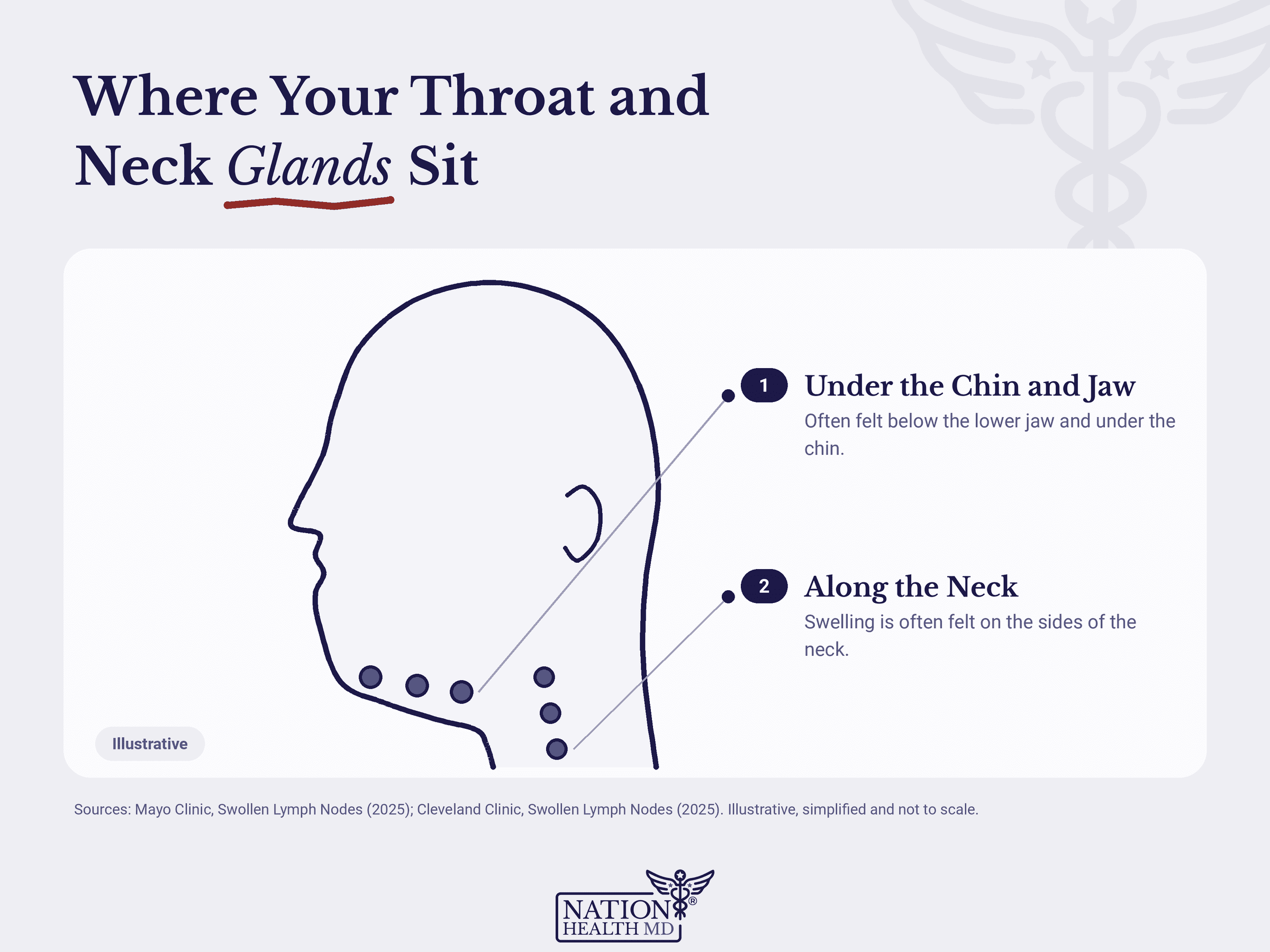
Cleveland Clinic adds that these nodes swell as a normal immune response when your body is fighting an illness. Because they sit close to your mouth, throat, and sinuses, they act as checkpoints for anything that enters through those areas. Healthy nodes are usually too small to feel. When you can feel them, they are working, which is often a sign that the immune system is active. When they are busy, they can swell to the size of a pea or a kidney bean, or larger.
Most of the time you will notice the swelling on the same side as the irritation. A sore tooth on the left, for example, often means a tender gland on the left. That pattern helps explain why one side can feel different from the other.
What Swollen Throat Glands Usually Mean
Most often, swollen throat glands mean your body is responding to something nearby. Mayo Clinic notes that the most common cause of swollen lymph nodes is an infection, usually viral, such as the common cold.
The typical pattern is a tender, movable lump that is about the size of a pea. It may feel sore when you press on it or swallow. If you want more detail on colds and sinus congestion, read our guide on swollen lymph nodes from a cold or sinus infection.
Common Causes of Swollen Throat Glands
A few everyday triggers account for most cases:
- Everyday throat and respiratory irritation. Your nose and throat are main entry points for germs, so they respond often, and nearby glands respond with them.
- Irritation of the tonsils. Your tonsils are lymph tissue, so they and the surrounding glands often react together.
- Dental or gum concerns near the jawline. An irritated tooth or gum can make the glands under the jaw swell.
- Irritation from an injury to the throat. Overusing your voice or irritation from food or acid can set off a mild response.
- Ear irritation. Pain in the ear often travels to the throat and neck, and nearby glands can swell.
Stress can also play a role in how your body feels. Our article on whether stress causes swollen glands goes into the details.
Less Common Causes Worth Knowing
Sometimes swelling has a less common cause. Immune-related causes and other less common causes exist, and a physician can sort them out. That is one reason persistent swelling deserves attention. This does not mean something serious is likely. It means that swelling which does not follow the usual pattern is worth a proper look.
What You Can Do at Home for Comfort
While your body works through the trigger, a few simple steps can help you feel more comfortable:
- Rest, and let your body focus on recovery.
- Drink plenty of fluids throughout the day.
- Apply a warm compress to the sore area for 10 minutes at a time.
- Gargle with warm salt water to soothe the throat.
- Sip warm drinks like herbal tea or broth.
A few extras can help too. Raise your head with an extra pillow at night if your throat feels congested. Run a humidifier to keep the air from drying out your throat. Choose soft, easy-to-swallow foods like soup, yogurt, and oatmeal while swallowing is sore.
These steps offer comfort. They are not a way to make swelling go away faster. For more ideas, see our guide with more comfort steps for swollen lymph nodes.
How to Check Your Own Glands Safely
It is natural to want to feel the lump, but go gently. Press softly with the pads of two fingers and move in small circles. Note the size, whether it moves under your fingers, and whether it is tender. Poking or squeezing over and over can irritate the area and make it feel worse.
Check once a day at most, and compare both sides. Jot down what you notice, along with the date. That record is useful if you decide to check in with a physician.

Supporting Your Body While You Recover
Rest, hydration, and gentle movement all support your body when it is under the weather. A short walk, steady water intake, and plenty of sleep give your immune system what it needs. Lymph relies on movement and fluid to flow, so staying a little active helps when you feel up to it.
For extra everyday support, lymphatic health supplements are formulated to support healthy lymph flow and immune function alongside rest, fluids, and comfort steps. They complement your routine rather than replace it.
When to See a Physician
Most swollen glands are not a cause for concern, but check in with a physician if you notice any of the following:
- Swelling that lasts more than two weeks, or two to four weeks at most
- Nodes that feel hard, rubbery, or fixed in place
- Swelling near the collarbone or low in the neck
- Fever, night sweats, or unexplained weight loss
- Swelling that keeps getting bigger
Seek immediate medical attention if you have trouble breathing, trouble swallowing your saliva, drooling, or a high fever with a stiff neck.
Conclusion
Swollen glands in the throat are usually a normal sign that your immune system is responding. They tend to ease within a week or two, and rest, fluids, and warm drinks can keep you comfortable in the meantime. Know the signs that call for a physician, and trust your instincts if something feels off.
FAQs
Yes. Tenderness is common, but some swollen glands do not hurt. A painless lump that stays or grows is worth a visit with a physician.
They often ease within one to two weeks, though they can take a bit longer to fully settle after an illness. If swelling lasts beyond two weeks, check in with a physician.
Swelling on one side is common, because the glands closest to the irritation react first. Still, one-sided swelling that persists deserves a check. Our guide on [swollen lymph nodes from a cold or sinus infection](https://blog.nationhealthmd.com/can-a-cold-or-sinus-infection-cause-swollen-lymph-nodes-in-the-neck/) covers one-sided swelling in more detail.
There is no proven way to speed it up. Rest, fluids, and warm drinks support comfort while your body works through the trigger. A jaw-related cause, like clenching, can also play a part, so see our article on [jaw tension and swollen lymph nodes](https://blog.nationhealthmd.com/can-tmj-cause-swollen-lymph-nodes/).
Popular Articles




Advertisement. This site offers health, wellness, fitness and nutritional information and is designed for educational purposes only. You should not rely on this information as a substitute for, nor does it replace, professional medical advice, diagnosis, or treatment. If you have any concerns or questions about your health, you should always consult with a physician or other health-care professional. Do not disregard, avoid or delay obtaining medical or health related advice from your health-care professional because of something you may have read on this site. The use of any information provided on this site is solely at your own risk.
Share: