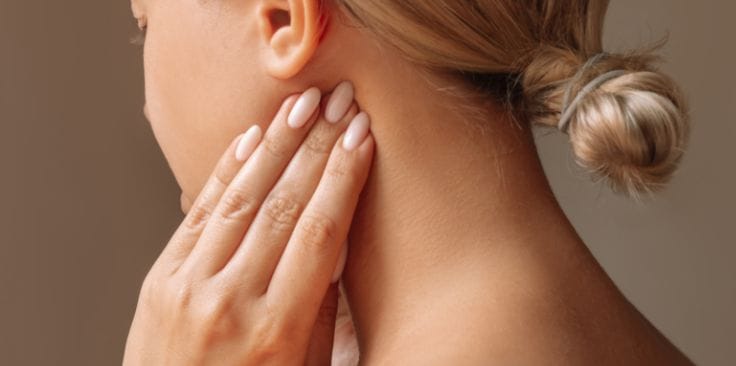

Can a Cold or Sinus Infection Cause Swollen Lymph Nodes in the Neck?
 Medically reviewed by our experts
 7 min read
  5 citations
Yes, colds and sinus infections are among the most common reasons for swollen lymph nodes in the neck. You may have noticed tender bumps under your jaw or along the sides of your neck while fighting off a cold or sinus infection. That swelling is a normal, expected part of your immune system doing its job. This article covers why it happens, how long it typically lasts, and when it is worth a closer look.
It is a common experience. Most people notice it at some point, usually without giving it much thought once the cold clears up. Understanding why the swelling happens can make it feel far less alarming the next time you notice it.
Key Article Findings
- Colds and sinus infections are a leading cause of swollen lymph nodes in the neck.
- The swelling reflects your immune system responding, not a separate problem.
- It typically eases within one to two weeks as the infection settles.
- Persistent, one-sided, or unusually severe swelling is worth a physician’s attention.
The Short Answer: Can a Cold or Sinus Infection Cause Swollen Lymph Nodes?
Yes. Upper respiratory infections are a leading cause of swollen lymph nodes, especially in the neck. This includes the common cold and sinus infections. The cervical lymph nodes filter fluid draining from the nose, throat, sinuses, and scalp. That is exactly the territory a cold or sinus infection affects. When immune cells gather in those nodes to respond, the nodes swell and can feel tender to the touch.
A sinus infection develops when the nasal cavities become inflamed and swollen, often after a cold. Fluid builds up, and germs grow. Most cases are viral and ease on a similar timeline to a common cold. A smaller share are caused by bacteria and may last longer. Either way, the swollen lymph nodes you notice are a byproduct of the same underlying process: your immune system responding to the infection.
Why Cervical Lymph Nodes Swell With a Cold or Sinus Infection
Lymph nodes act as filtration checkpoints for the immune system. Fluid drains from the sinuses, nasal passages, and throat toward the nodes in your neck. Immune cells inside those nodes multiply to identify and respond to whatever is causing the infection. That activity is what makes the nodes feel larger and more tender than usual. A cold or sinus infection affects the exact areas those nodes filter, so the neck is often where swelling shows up first and most noticeably.
The cervical nodes sit in clusters under the jaw, along the sides of the neck, and behind the ears. Several of these clusters can be involved at once during a cold or sinus infection. Feeling more than one tender spot in this area during an active infection is common. It does not necessarily mean anything more serious than the infection itself.
How Long Does Swelling From a Cold or Sinus Infection Usually Last?
Swelling tied to a cold typically follows the infection’s own timeline. Acute sinus infections usually improve within one to two weeks, and lymph node swelling generally eases along a similar path, with full resolution sometimes taking three to four weeks. If swelling lingers well beyond that, or continues to grow instead of settling, it is worth a closer look.
A sinus infection is generally considered to be improving if symptoms steadily ease rather than worsen after about ten days. If symptoms seem to get better and then suddenly worsen again, or if they simply have not budged after ten days, that pattern can point to a bacterial infection that may benefit from a physician’s evaluation rather than continued home care alone.
Other Signs a Sinus Infection Is Behind Your Swollen Glands
A few accompanying symptoms can help confirm that a sinus infection, rather than something else, is behind the swelling you are noticing. Nasal congestion, facial pressure around the eyes, cheeks, or forehead, postnasal drip, and a sore throat that lingers after other cold symptoms fade are all common companions to sinus-related lymph node swelling. Noticing several of these together, alongside the neck swelling, points toward a sinus infection as the likely cause.
A low grade fever, generally under 103 degrees Fahrenheit, can sometimes accompany a sinus infection as well, though it is less common than the congestion and pressure symptoms above. Bad breath tied to postnasal drip is another everyday clue people often overlook, since mucus draining down the back of the throat can affect breath even when nothing else feels obviously wrong.
When to See a Physician
Most swelling tied to a cold or sinus infection settles on its own within a couple of weeks. It is worth checking in with a physician if swelling lasts more than two weeks, if a node feels hard or fixed in place, if more than one area is affected, or if you notice fever, night sweats, or unexplained weight loss. Difficulty swallowing or breathing alongside swollen lymph nodes calls for prompt medical attention.
Supporting Your Body While You Recover
Rest and steady hydration give your immune system the resources it needs to work through a cold or sinus infection efficiently. A warm compress applied to a tender area can ease discomfort, and gentle movement, rather than complete inactivity, tends to support overall circulation while you recover.
Warm liquids like tea or broth can add fluid while providing a bit of soothing comfort for a sore throat, and breathing in moist air from a shower or humidifier may ease congestion enough to help you rest more comfortably. Sleeping with your head slightly elevated can also reduce the sense of pressure some people notice with sinus congestion overnight. A few simple home remedies can add extra comfort during this stretch.
For those looking for extra everyday support, lymphatic health supplements are formulated to help support healthy lymph flow and immune function during recovery, alongside rest and hydration. These are complementary, structure function support rather than a substitute for your body’s own recovery process.

Conclusion
Swollen lymph nodes in the neck are a common, expected part of fighting off a cold or sinus infection, and they typically ease as the infection itself settles. Supporting your body with rest, hydration, and gentle comfort measures can help, and a physician’s input is worth seeking out if swelling persists or feels unusual.
Most of the time, this kind of swelling is simply a sign that your immune system is doing exactly what it should. Paying attention to the overall pattern, rather than dwelling on the swelling alone, tends to give a clearer picture of whether things are progressing normally.
Swelling can be more noticeable on one side, particularly if congestion or drainage is more pronounced there. Marked, persistent asymmetry that does not track with your other symptoms is worth mentioning to a physician.
It is possible, especially early on, for swelling to show up before other symptoms become noticeable. Most people will develop additional signs like congestion or facial pressure within a day or two.
Supporting your body while the infection runs its course, through rest, hydration, and comfort measures, generally helps swelling ease along its natural timeline. There is no way to make lymph node swelling disappear faster than the underlying infection settles on its own.
Allergies work through a different mechanism and are a less common, less direct cause of swollen lymph nodes than an active infection. The two can sometimes overlap, since allergy related congestion can make you more prone to a secondary sinus infection.
Cleveland Clinic. (2024). Swollen lymph nodes (lymphadenopathy): Symptoms & causes. Cleveland Clinic.
Healthline. (2025). What to know about sinus infection (sinusitis). Healthline.
Mayo Clinic. (2024). Swollen lymph nodes: Symptoms and causes. Mayo Clinic.
Cleveland Clinic. (n.d.). Swollen glands: Why you get them and when to worry. Cleveland Clinic.
Watson, K. (2023). How to make a dry or moist warm compress. Healthline.
Popular Articles



Advertisement. This site offers health, wellness, fitness and nutritional information and is designed for educational purposes only. You should not rely on this information as a substitute for, nor does it replace, professional medical advice, diagnosis, or treatment. If you have any concerns or questions about your health, you should always consult with a physician or other health-care professional. Do not disregard, avoid or delay obtaining medical or health related advice from your health-care professional because of something you may have read on this site. The use of any information provided on this site is solely at your own risk.
Share: